Professional biography & career history

Michael P. Goodman

Technology executive · IT infrastructure specialist · Systems architect · Entrepreneur · AI & emerging technology strategist

Nearly three decades of hands-on work across server infrastructure, Microsoft Windows environments, networking, virtualization, systems administration, managed IT services, web technology, and emerging artificial intelligence.

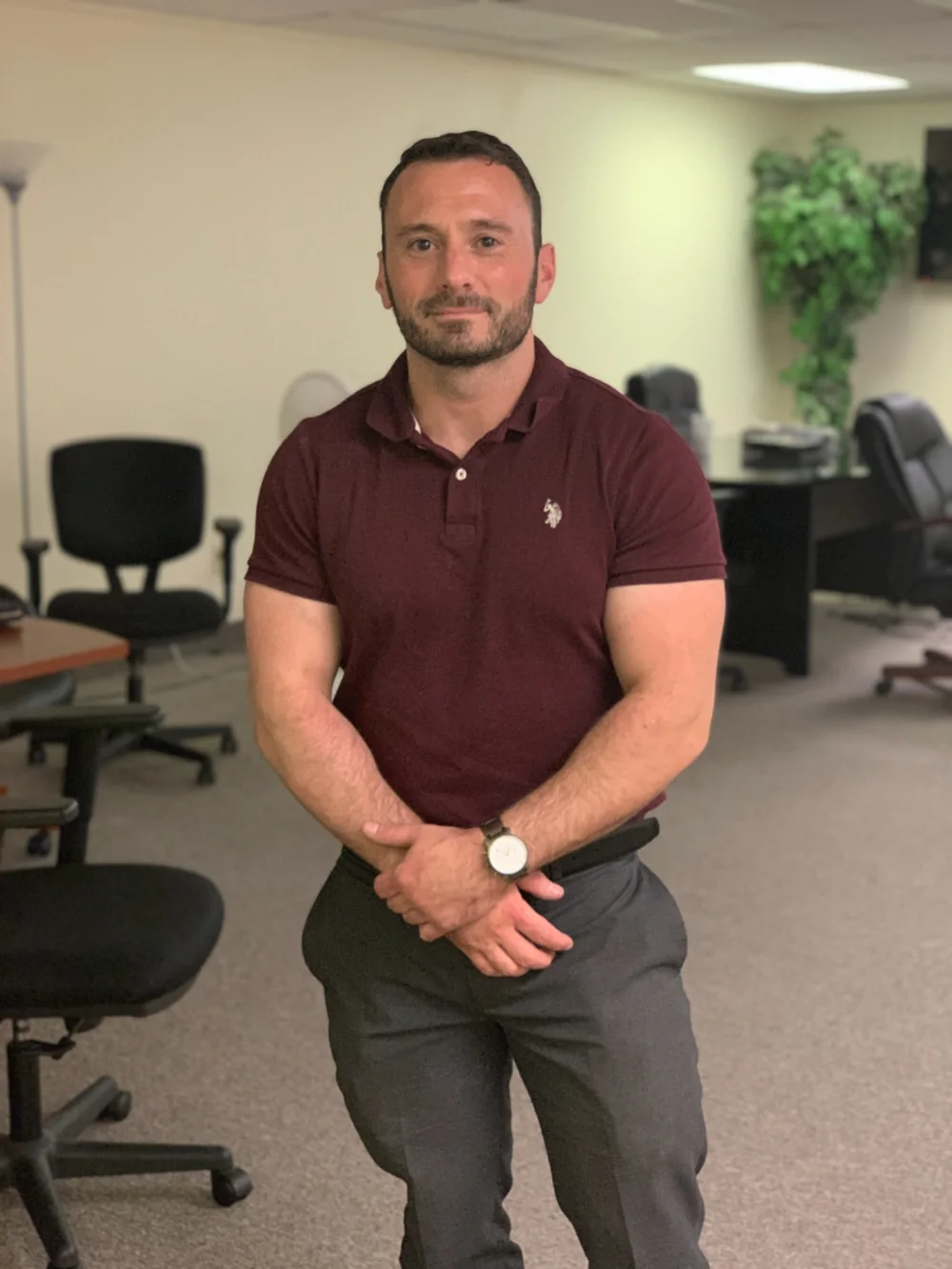
Portrait of Michael P. Goodman

Broad by design, deep by necessity.

A career built across the full technology stack rather than inside a single layer of it.

Michael P. Goodman is a technology executive, systems specialist, entrepreneur, and technology strategist with approximately three decades of hands-on experience spanning information technology, server infrastructure, Microsoft Windows environments, networking, virtualization, systems administration, computer hardware, managed IT services, web technologies, digital marketing, and emerging artificial intelligence.

His career has been characterized by an unusually broad combination of deep hands-on technical knowledge and business ownership. Rather than specializing exclusively in one layer of technology, Goodman has worked across the stack — from physical server hardware and operating systems to networks, applications, websites, cloud services, cybersecurity considerations, automation, and business operations.

Over the course of his career he has designed, deployed, maintained, repaired, managed, and optimized technology systems for individuals, small businesses, and organizations with operational dependence on reliable computing infrastructure.

Technology exists to solve problems, reduce friction, improve capability, protect information, and create measurable business value.

That philosophy is fundamentally practical, and it is the reason his work has consistently moved between engineering detail and business consequence. Understanding hardware, operating systems, networking, storage, and applications at a working level makes it possible to diagnose problems across multiple layers of an infrastructure rather than treating every failure as an isolated software issue.

~28 yrsServer & Windows infrastructure
20+ yrsTechnology business ownership
10+ yrsWeb, SEO & digital marketing
MCSE+IPlus A+, Network+, ITIL

A progression through several technological eras.

The tools changed constantly. The underlying discipline did not: understand technology deeply enough to make it useful.

  1. Early career

    Computer hardware and systems fundamentals

    Building, configuring, repairing, upgrading, and troubleshooting computer systems at the hardware and operating-system level — the foundation everything later was built on.

  2. Systems administration

    Windows Server, infrastructure, virtualization

    Server hardware, storage and RAID architecture, Active Directory, Group Policy, domain environments, server roles, migrations, and virtualized server estates.

  3. Missouri technology businesses

    IT services, operations, consulting

    Technology Service Specialists, Computer Service Specialists of Missouri, CSS Technologies, and M & J Goodman Enterprises — progressively broader responsibility across technical services, operations, and business management.

  4. BizBackup Worldwide Services

    Backup, continuity, managed services

    Business-continuity and backup infrastructure work that predates the current popularity of the managed-services model while covering many of the same operational disciplines.

  5. Computer Service Specialists Of New York

    Entrepreneurship and Rochester IT services

    Founded to deliver business IT support, server and network installation, managed services, repair, data recovery, and long-term technology relationships in the Rochester market.

  6. Rochester expansion

    Business IT, networking, web and SEO

    Service capability extended into website development, domain and DNS administration, email systems, search-engine optimization, and digital marketing for small-business clients.

  7. Advanced technology

    Automation, virtualization, high-performance computing

    Deeper work in automation, containerization, modern GPU computing, high-memory workstations, and higher-speed 10 GbE and 25 GbE network architectures.

  8. AI transition

    Local AI, LLMs, GPU infrastructure

    Local inference, private AI servers, retrieval-augmented generation, containerized AI infrastructure, and AI-assisted business automation.

  9. Current & forward

    AI agents, private AI, BCI and neurotechnology

    Private AI infrastructure for sensitive data, agentic automation, MLOps, and experimental human-computer interaction including EEG and brain-computer interfaces.

Where the hands-on work has actually happened.

Infrastructure, networking, virtualization, and web technology treated as one connected ecosystem rather than separate specialties.

Server infrastructure

  • Server hardware selection and configuration
  • Storage architecture, RAID and disk systems
  • Operating-system deployment and maintenance
  • Performance optimization and diagnostics
  • Server replacement and migration
  • Backup, recovery, and virtualized environments

Microsoft infrastructure

  • Windows Server and domain environments
  • Active Directory and Group Policy
  • Server roles, services, and authentication
  • User and workstation administration
  • Windows networking
  • Microsoft-based business infrastructure

Networking

  • TCP/IP, LAN/WAN, routing and switching
  • DNS, DHCP, and network addressing
  • Wireless and remote connectivity
  • Network security considerations
  • Business network architecture
  • High-performance 10 GbE and 25 GbE

Virtualization

  • Server virtualization and VM architecture
  • Resource allocation and sizing
  • Storage considerations for virtual estates
  • OS deployment and lifecycle
  • Maintaining virtualized environments
  • Bridge into containerized AI infrastructure

Hardware & workstations

  • Desktops, workstations, and servers
  • CPUs, memory, motherboards, power, cooling
  • GPUs and high-memory configurations
  • Hardware diagnostics and upgrades
  • Custom system configurations
  • AI workstations and local inference systems

Web, SEO & digital

  • Website development and administration
  • HTML, WordPress, and static site delivery
  • Domain, DNS, hosting, and email infrastructure
  • Technical and on-page SEO
  • Organic and paid search
  • Website performance and optimization

Technology as a business capability, not only an engineering discipline.

A substantial portion of this career has been spent building and operating technology businesses — which requires far more than the technical side of an organization.

CSSNY
FOUNDER & PRESIDENT · ROCHESTER, NEW YORK

Computer Service Specialists Of New York

A Rochester-area technology services company established to provide practical technical support and long-term technology relationships to businesses and individuals. Public listings identify its specialties as IT services, computer services and repair, networking, web development, and SEO marketing (LinkedIn company profile), and New York business records show Computer Service Specialists Of New York, LLC organized as a New York limited liability company in January 2017 with Michael P. Goodman named in the company's state filing information (New York filing information). Independent business listings document work across business IT, networking, server management, computer repair, data recovery, and web development (Angi listing).

Business IT supportManaged servicesServer installationNetwork installationRemote supportData recoverySecurity troubleshootingWorkstation deploymentWeb developmentSEOTechnology consulting

Earlier technology ventures

Before establishing the Rochester operation, significant experience was developed through technology businesses and professional roles in Missouri.

Technology Service SpecialistsTechnical services and support operations
Computer Service Specialists of MissouriIT services and business technology
CSS TechnologiesInfrastructure and consulting work
M & J Goodman EnterprisesBusiness operations and management
BizBackup Worldwide ServicesBackup, continuity, and managed services

Across those years the work spanned systems administration, server management, networking, technical support, backup systems, IT operations, consulting, and business management — the foundation that Computer Service Specialists Of New York was later built on.

The work, in practice.

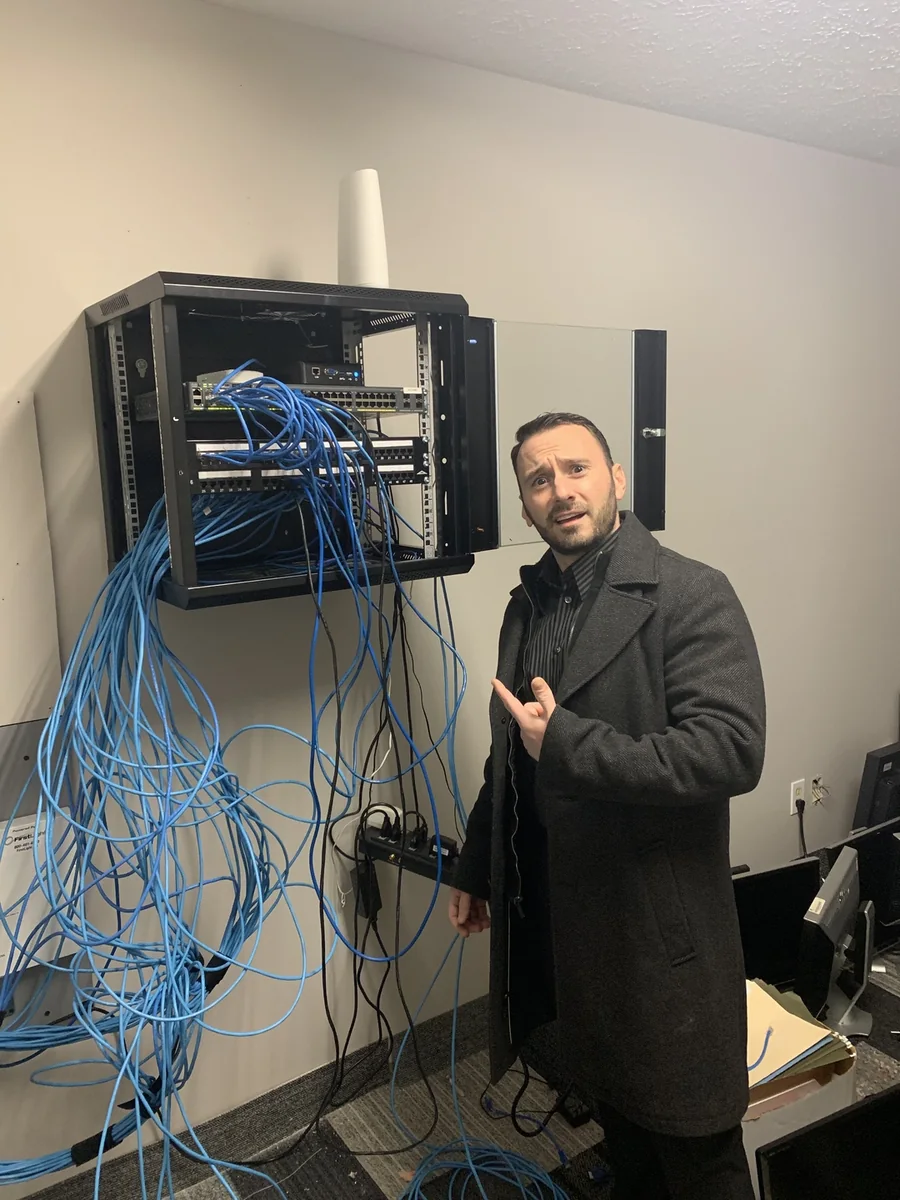
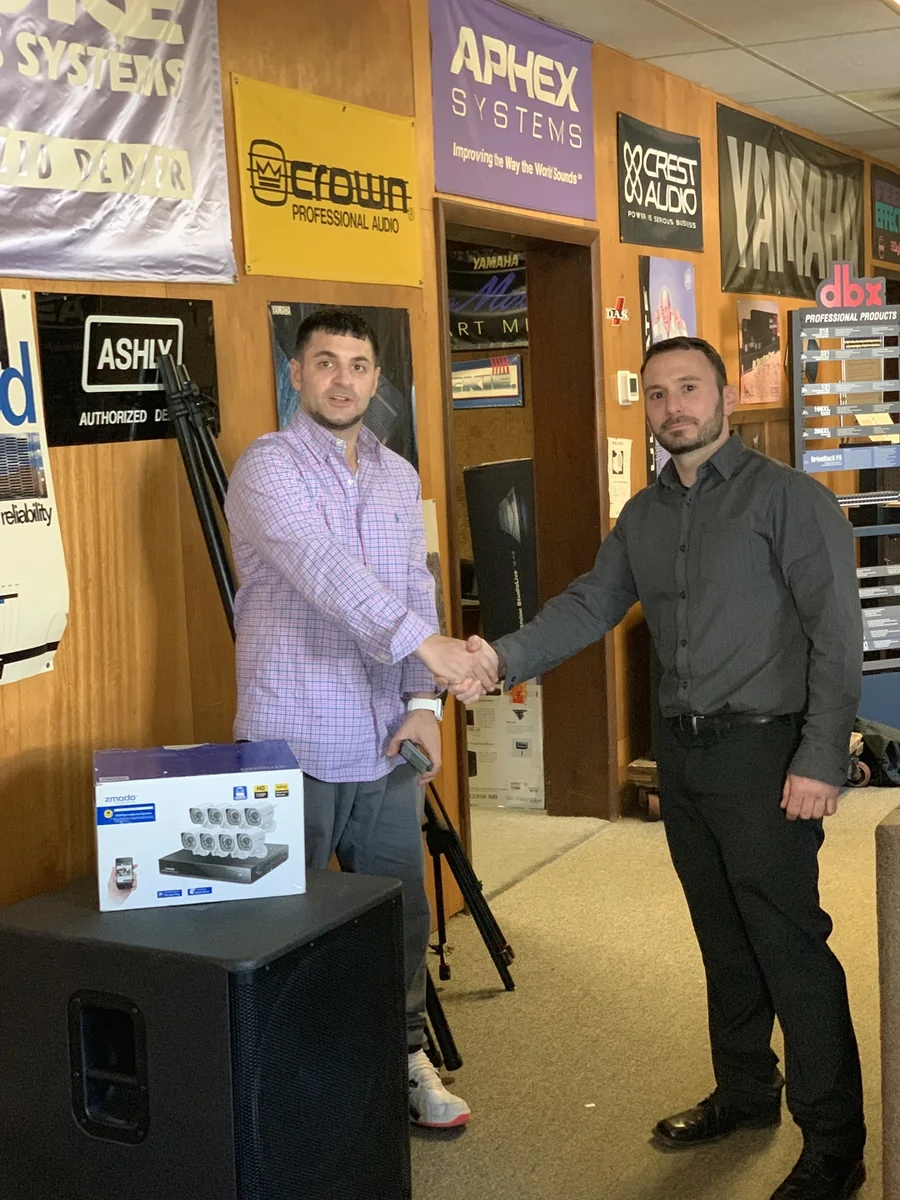
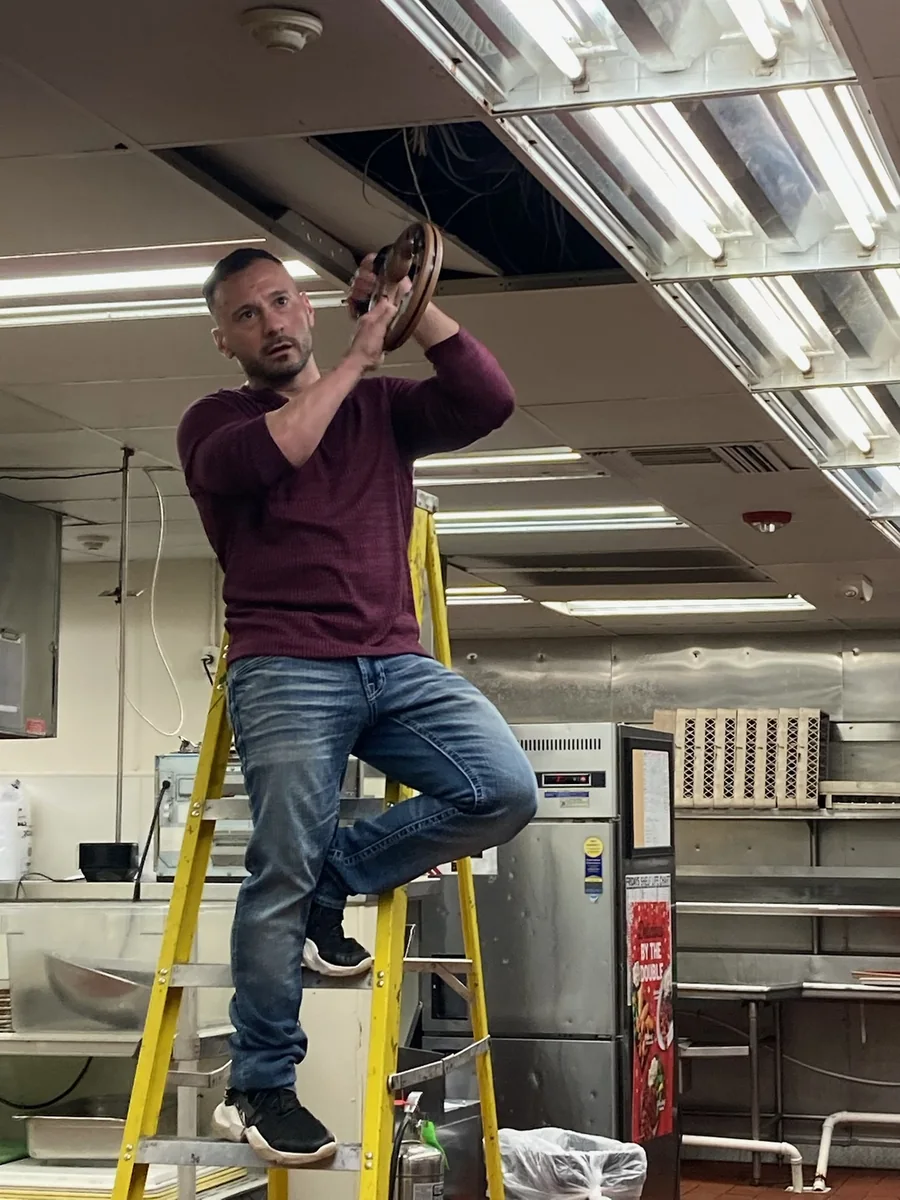
Behind the résumé language is a lot of ordinary, hands-on work — the kind that happens on ladders, behind wiring closets, and across a handshake once the job is done.

Michael P. Goodman beside an open network rack, tracing a tangle of cabling during an on-site infrastructure visit
On-site network cabling and rack cleanup — infrastructure work often starts with untangling what's already there.
Michael P. Goodman shaking hands with a client after delivering a security camera system
Closing out a security-camera system delivery — the relationship side of technology work matters as much as the technical side.
Michael P. Goodman on a ladder servicing ceiling infrastructure in a commercial kitchen
Hands-on service work in a commercial kitchen — diagnosing and repairing infrastructure wherever it lives.

Private AI as the next generation of server architecture.

Private computing infrastructure + modern AI models + automation + enterprise data.

The newest phase of this career focuses on artificial intelligence and emerging computing technologies — and specifically on private, locally controlled AI infrastructure rather than AI treated exclusively as a cloud software subscription.

The interest is direct: organizations increasingly need to process sensitive information with modern AI without transmitting everything to third-party providers. Legal documents, medical and healthcare workflows, accounting and financial records, corporate knowledge bases, internal documentation, and private research all fit that pattern.

It is a natural continuation of the earlier work. The underlying problem is unchanged — how can computing technology be engineered to solve real problems more effectively? The difference is that modern AI supplies far more computational capability and entirely new interfaces through which systems interact with people.

AI infrastructure

  • Local large language models and private AI servers
  • GPU computing and AI workstations
  • Retrieval-augmented generation and vector storage
  • AI agents and workflow automation
  • Containerized AI infrastructure and MLOps
  • Open-source AI systems and private data processing

Human-computer interaction

  • EEG and biosignal processing
  • Brain-computer interfaces and neurotechnology
  • AI-assisted neural signal interpretation
  • Cognitive-state analysis
  • Experimental interface platforms such as OpenBCI
  • Robotics, drones, VR/AR, and autonomous systems

The common question behind all of it: what happens when the computer interface moves beyond keyboards, mice, touchscreens, and voice?

Six principles that have held up for three decades.

01

Understand the system

Do not treat technology as a black box. Understand the hardware, operating system, network, software, dependencies, failure modes, and business requirements.

02

Solve the actual problem

A technically elegant solution is worthless if it does not solve the customer's real problem.

03

Build for the future

Design with scalability, maintainability, security, and future expansion in mind.

04

Use the right tool

The newest technology is not automatically the best. A mature, inexpensive, reliable solution often beats a complicated modern alternative.

05

Automate repetition

If a task is performed repeatedly and predictably, it eventually becomes a candidate for automation.

06

Keep learning

A technology professional who stops learning eventually becomes a professional who knows how technology used to work.

Certified, then continuously self-directed.

In information technology, technologies frequently become obsolete faster than formal programs can adapt.

Professional development has combined Microsoft and industry certification with extensive self-directed technical education — researching new technologies as they emerge and building practical systems in order to genuinely understand them.

MCSEMCSE + InternetCompTIA A+CompTIA Network+ITIL

Ultimately a technologist.

Not simply a computer technician. Not simply a systems administrator. Not simply a business owner. Not simply an IT manager. This career has combined all of those disciplines — decades of learning how technology works at the component level, how systems interact at the infrastructure level, how businesses depend on those systems operationally, and how emerging technologies change what computers are capable of doing.

Build it. Understand it. Fix it. Improve it. Automate it. Then figure out what comes next.

Want the short version?

Download a one-page summary of capabilities, selected work, and credentials as a PDF.

Download résumé (PDF) ↓

Have a difficult system, an ambitious prototype, or a role that needs judgment?

Tell me what you are trying to accomplish, what is failing, or what you need built.